01 — Question
Where rivers go.
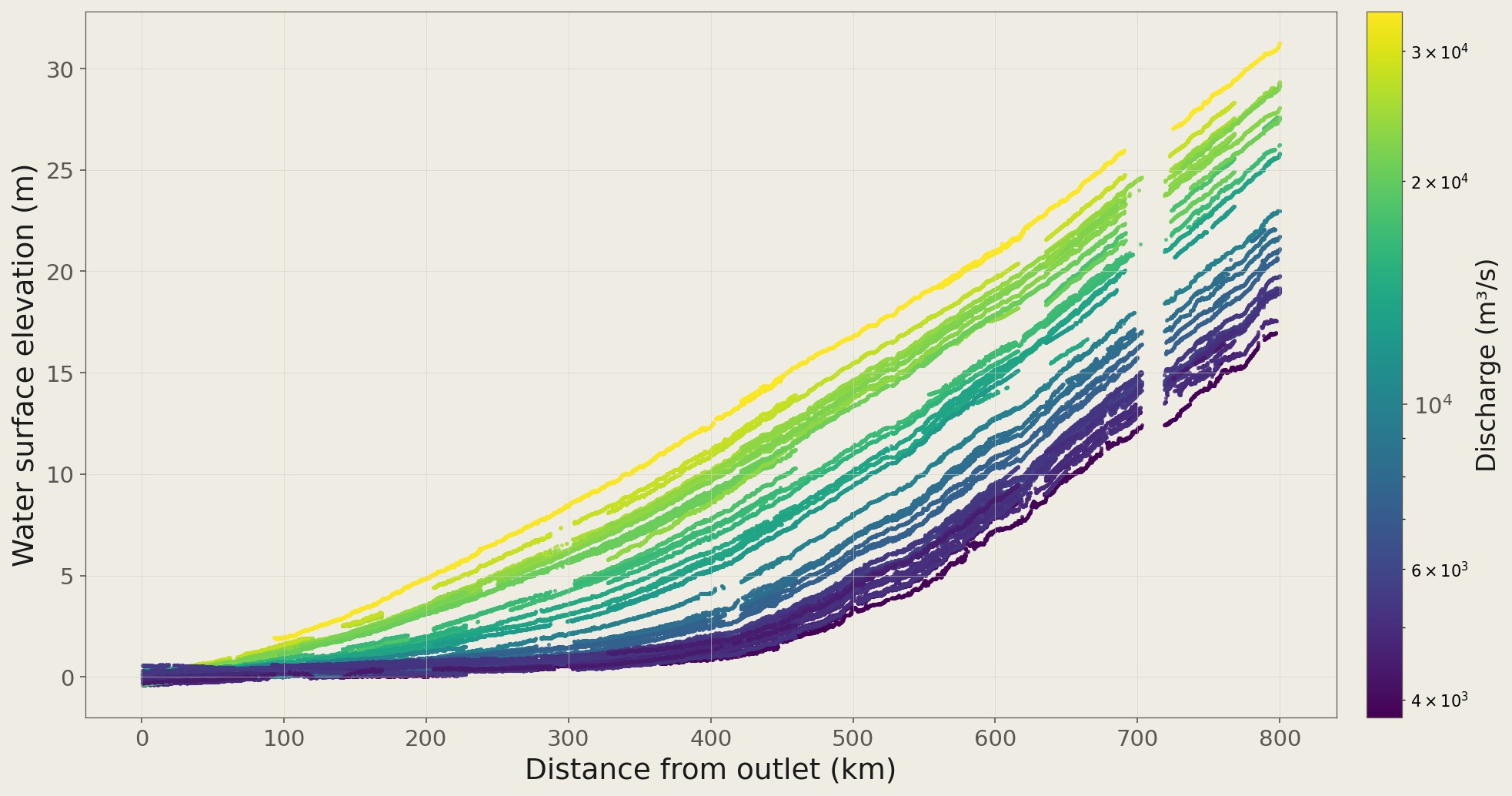
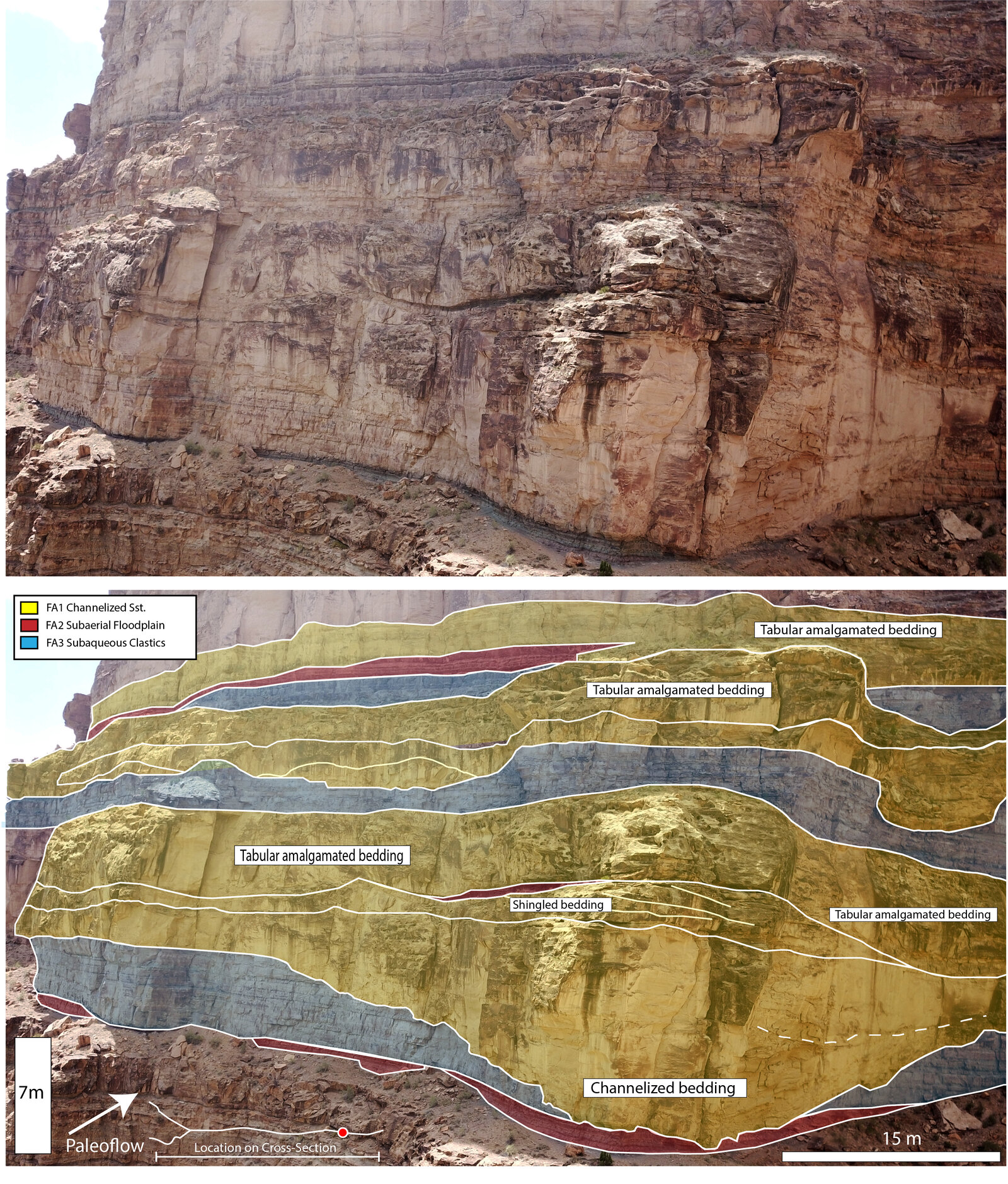
Predicting the path of an avulsing river before it moves. The geometric signatures in floodplain topography that encode avulsion risk — and how they change downstream.
Rules of river avulsion change downstream
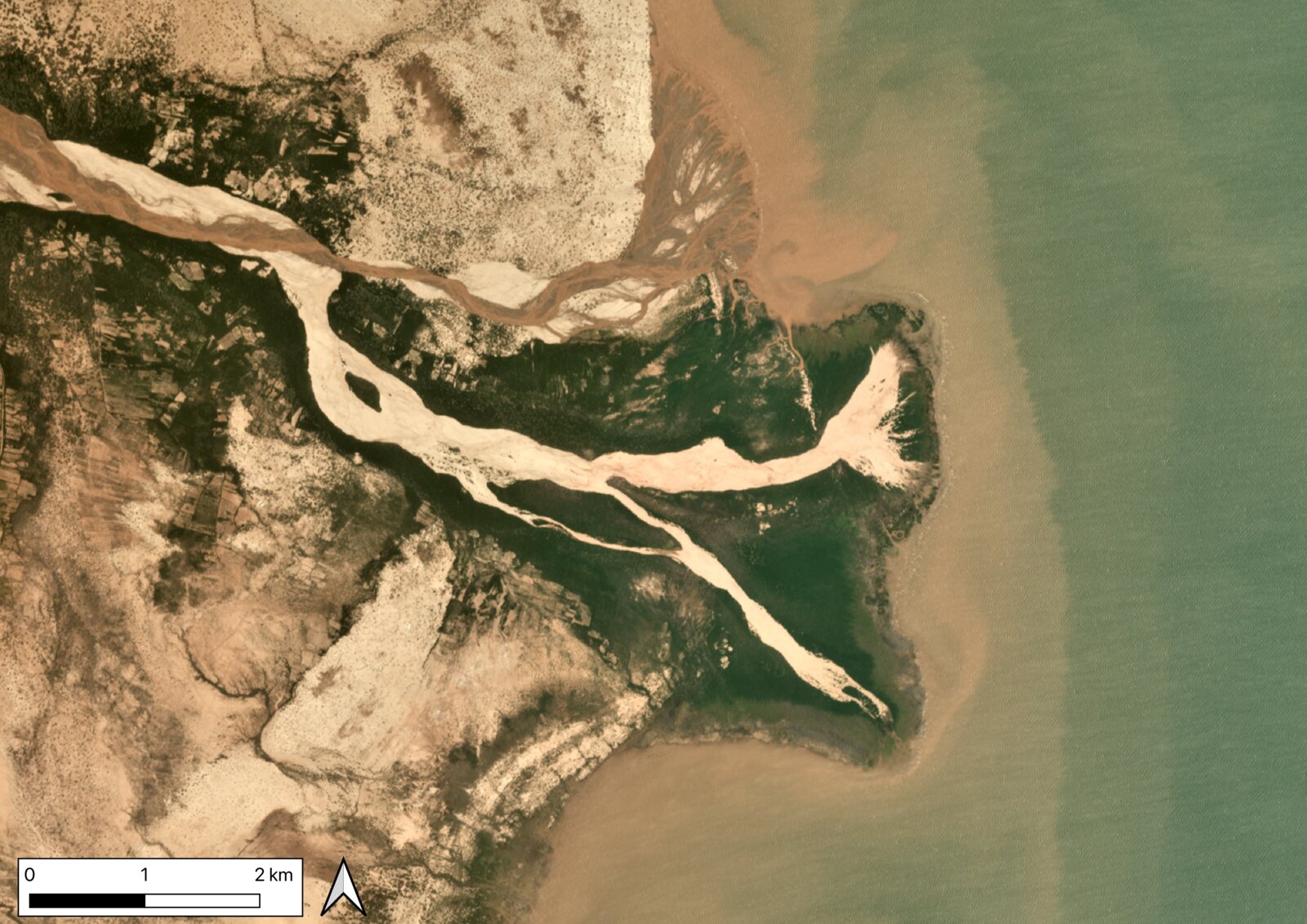
A framework for predicting where rivers leave their channels. The geometry that controls avulsion shifts predictably along a river — and the rules differ between fans, alluvial plains, and deltas. Built from 174 post-1984 avulsions, mapped from satellite imagery and SRTM topography.
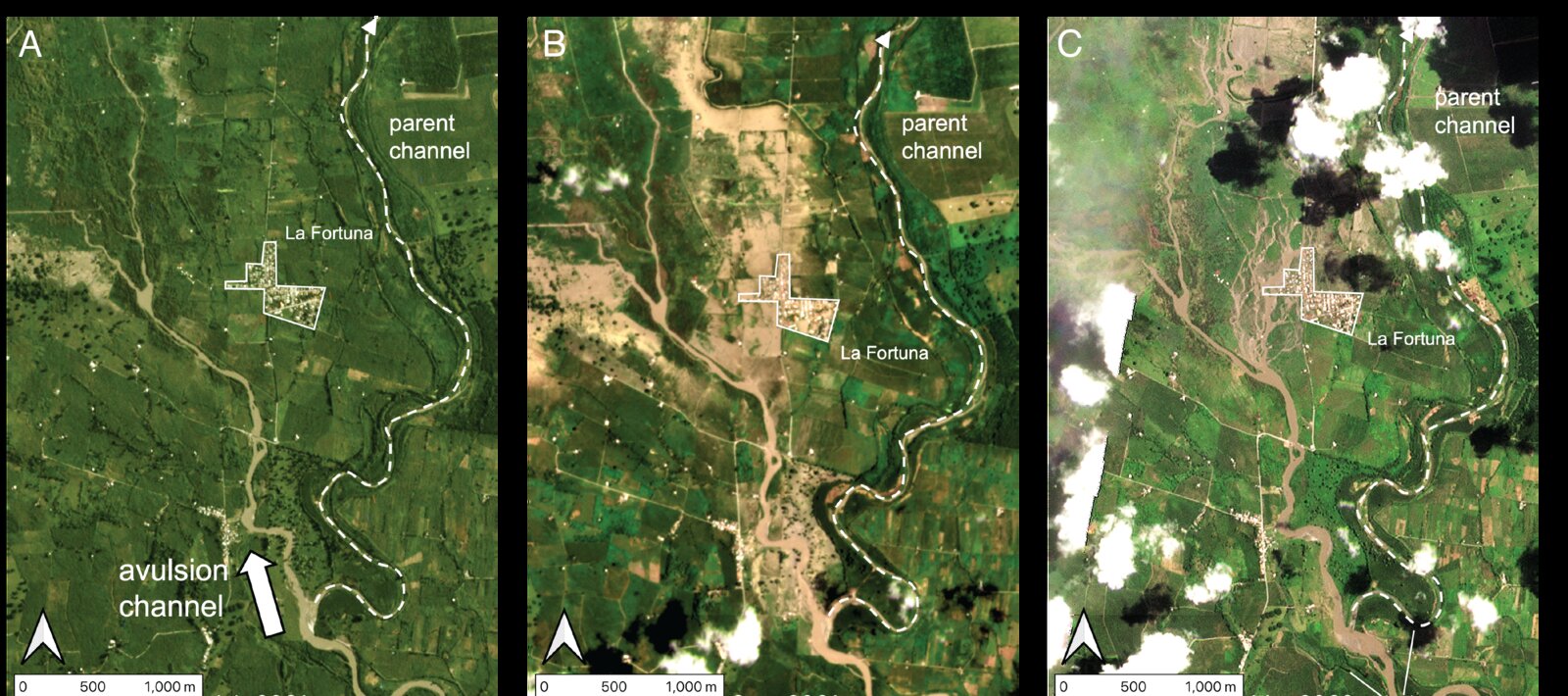
Avulsion precursors encoded in alluvial ridge geometry
A follow-on. The shape of the alluvial ridge around a channel records imminent avulsion risk before the channel breaks. A topographic precursor signal you can read from a DEM.
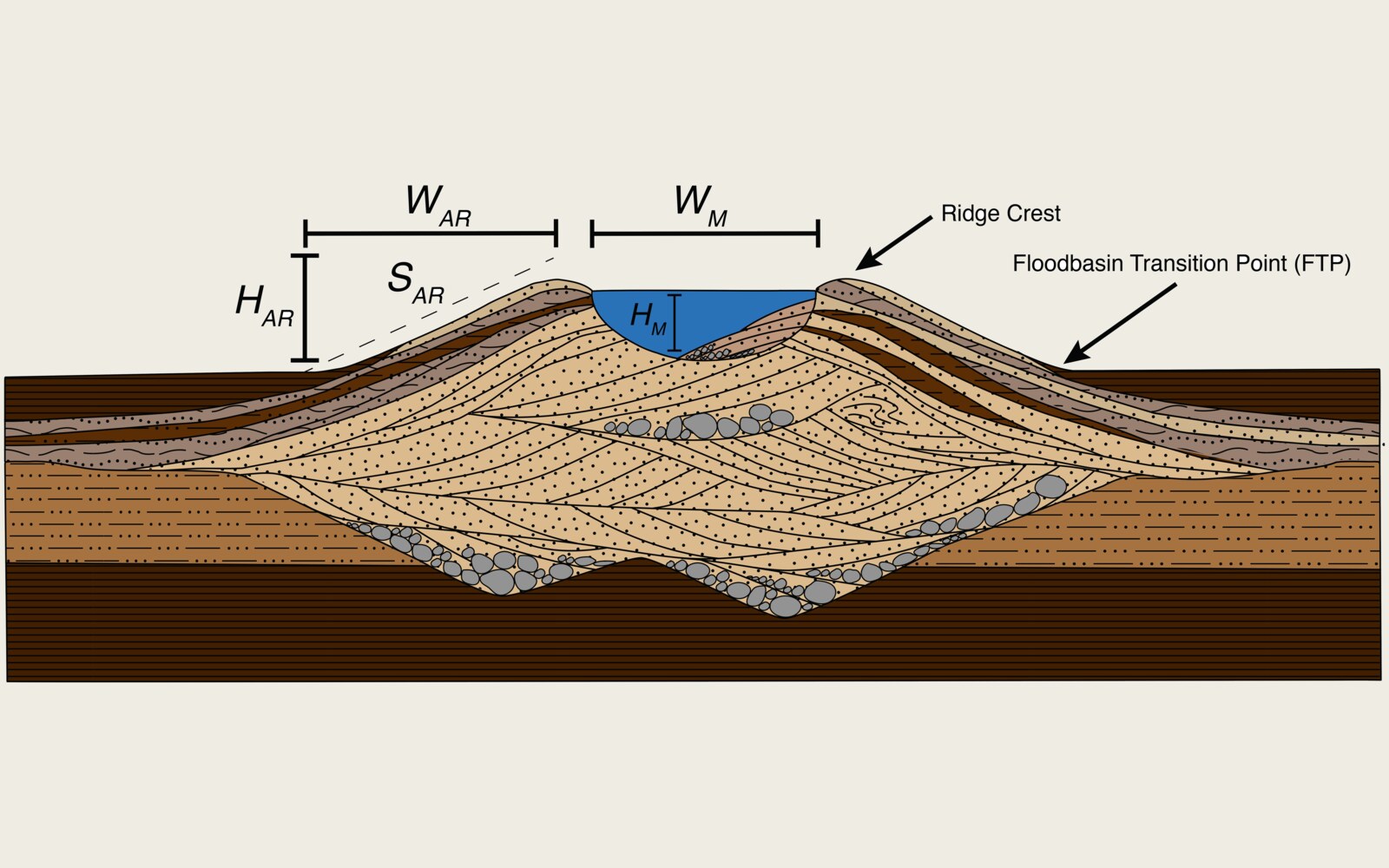
Alluvial ridge morphology on avulsing rivers
The ridge geometry itself, measured at scale — 8,970 flanks on 14 rivers, from a bare-earth global DEM. Ridges widen faster than they grow tall, and ridge height falls as channel depth rises, so deep channels resist superelevation. A geometric reason the rules change downstream. Flank shape runs concave to convex; no single idealized profile fits.